
A UK maternity birth plan aligned with the National Health Service (NHS) is a personalised document that reflects your preferences for labour, birth, and postnatal care while following NHS maternity policies, safety guidelines, and available services.
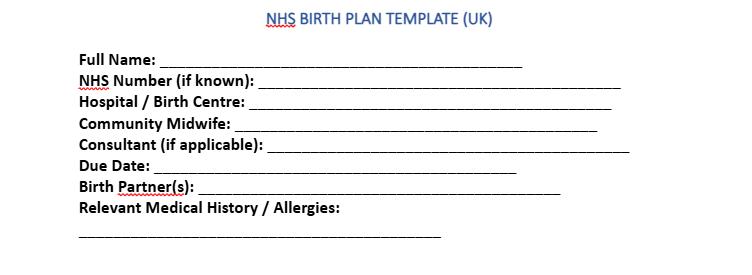
1. Designed Around NHS Maternity Pathways
In the UK, maternity care is structured through:
- Community midwives
- Midwife-led units (MLUs)
- Alongside birth centres
- Obstetric-led labour wards
- Consultant-led care for higher-risk pregnancies
An NHS-aligned birth plan considers which pathway you are on (low-risk vs consultant-led care) and reflects realistic options available within NHS hospitals or home birth services.
2. Reflects NHS-Available Pain Relief Options
The plan includes options commonly offered in NHS settings, such as:
- Entonox (Gas and Air)
- Opioid injections (e.g., pethidine)
- Epidural (available in obstetric units)
- Water birth (where facilities exist)
Unlike private birth plans, it does not assume availability of non-standard interventions unless your trust offers them.
3. Follows NHS Monitoring Guidelines
An NHS-aligned plan includes preferences for:
- Intermittent monitoring (common for low-risk pregnancies)
- Continuous CTG monitoring (for higher-risk cases)
- Consent before vaginal examinations
- Clear explanation before procedures
It respects NHS informed consent standards and shared decision-making principles.
4. Includes NHS Standard Newborn Care
The template reflects standard NHS newborn practices such as:
- Delayed cord clamping (commonly supported)
- Vitamin K (injection or oral option where available)
- Skin-to-skin contact
- Rooming-in
- Newborn screening tests (heel prick test, hearing screening)
It acknowledges that some procedures are routine but still require parental consent.
5. Incorporates NHS Safety & Flexibility Language
NHS birth plans typically include wording such as:
“I understand that flexibility may be required to ensure safety.”
This reflects NHS guidance that maternal and neonatal safety takes priority if complications arise.
6. Suitable for NHS Documentation
An NHS-aligned birth plan:
- Fits within maternity notes (often digital or handheld notes)
- Is usually 1–2 pages (midwives prefer concise plans)
- Uses realistic requests rather than rigid demands
- Encourages discussion during antenatal appointments
7. Covers UK-Specific Considerations
It may include:
- Home birth through NHS community midwife teams
- Midwife-led unit preferences
- Cultural or religious considerations
- Postnatal ward preferences
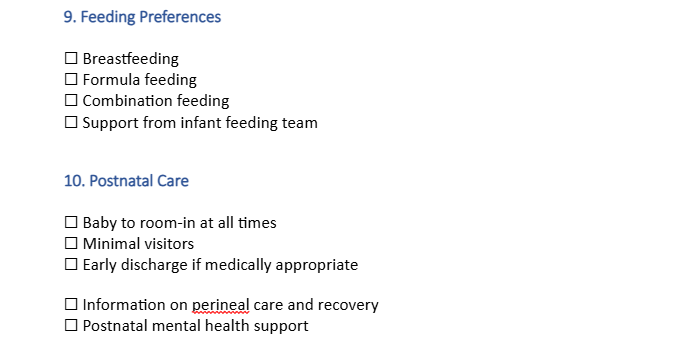
- Infant feeding team support
- Postnatal mental health support (important within NHS services)
Why Alignment Matters
An NHS-aligned birth plan is helpful because:
- It reflects what is actually available in your local NHS Trust
- It improves communication with your midwife
- It supports shared decision-making
- It avoids unrealistic expectations
- It prioritises safety within NHS clinical standards
Download nhs aligned birth plan template UK (free) from here: